Modern Bathroom-Laundry Integration: Creative Space Solutions
Crafting a living space that harmonizes practicality with aesthetic appeal can test even seasoned designers, especially when combining two essential areas such as the bathroom and laundry room. This dual-purpose design concept has surged in popularity within contemporary home planning, because it maximizes limited space without compromising on aesthetics or usability. An intelligently planned combo elevates home living by blending operational efficiency with sophisticated design, enhancing both comfort and convenience.
One of the most critical aspects of designing a combined bathroom and laundry area is ensuring proper spatial planning, Experts highlight that carefully orchestrated spatial arrangements directly impact usability, which involves careful consideration of plumbing, ventilation, and storage solutions. The placement of appliances, such as a washing machine and dryer, must not interfere with the flow of the bathroom, and vice versa. Space-saving strategies such as stacked units or miniaturized appliances are frequently suggested. Smart planning converts limited spaces into versatile environments while maintaining a clean, uncluttered look.
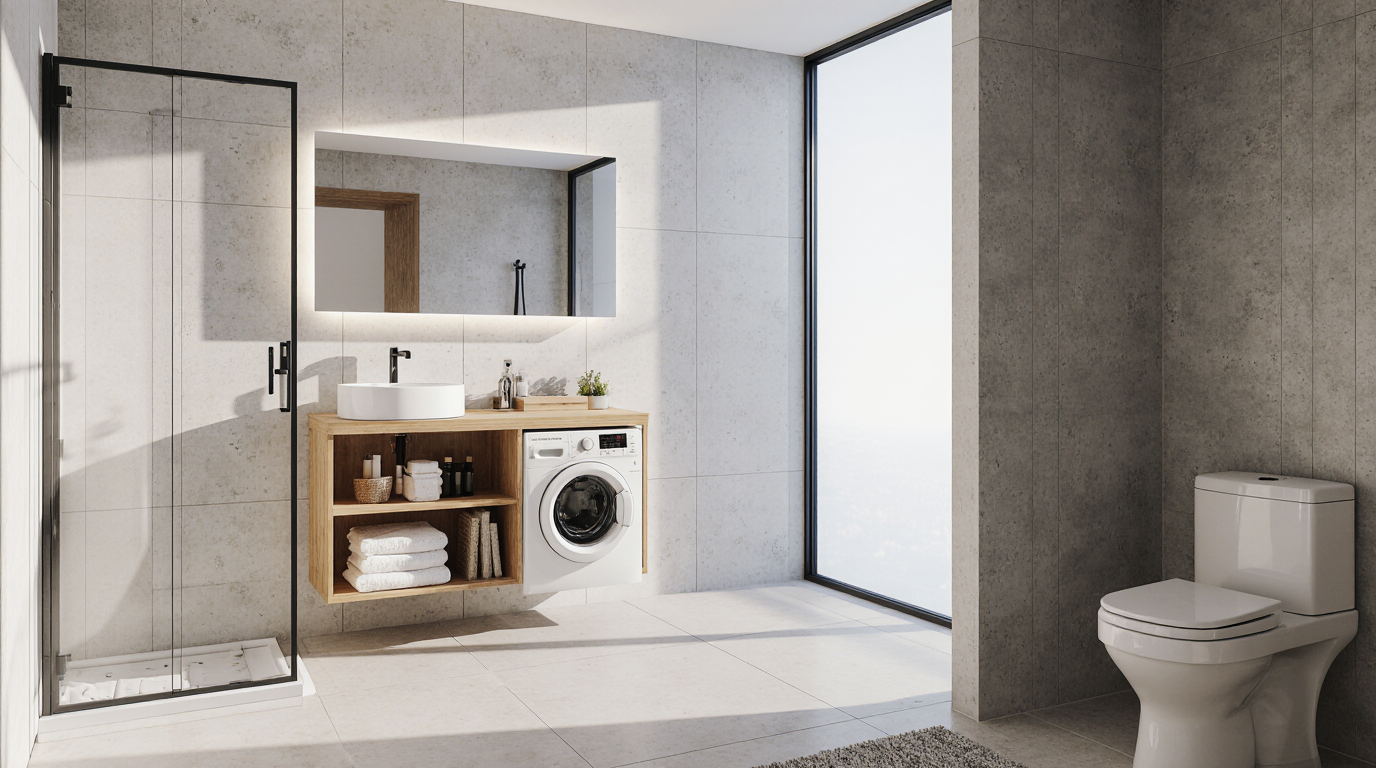
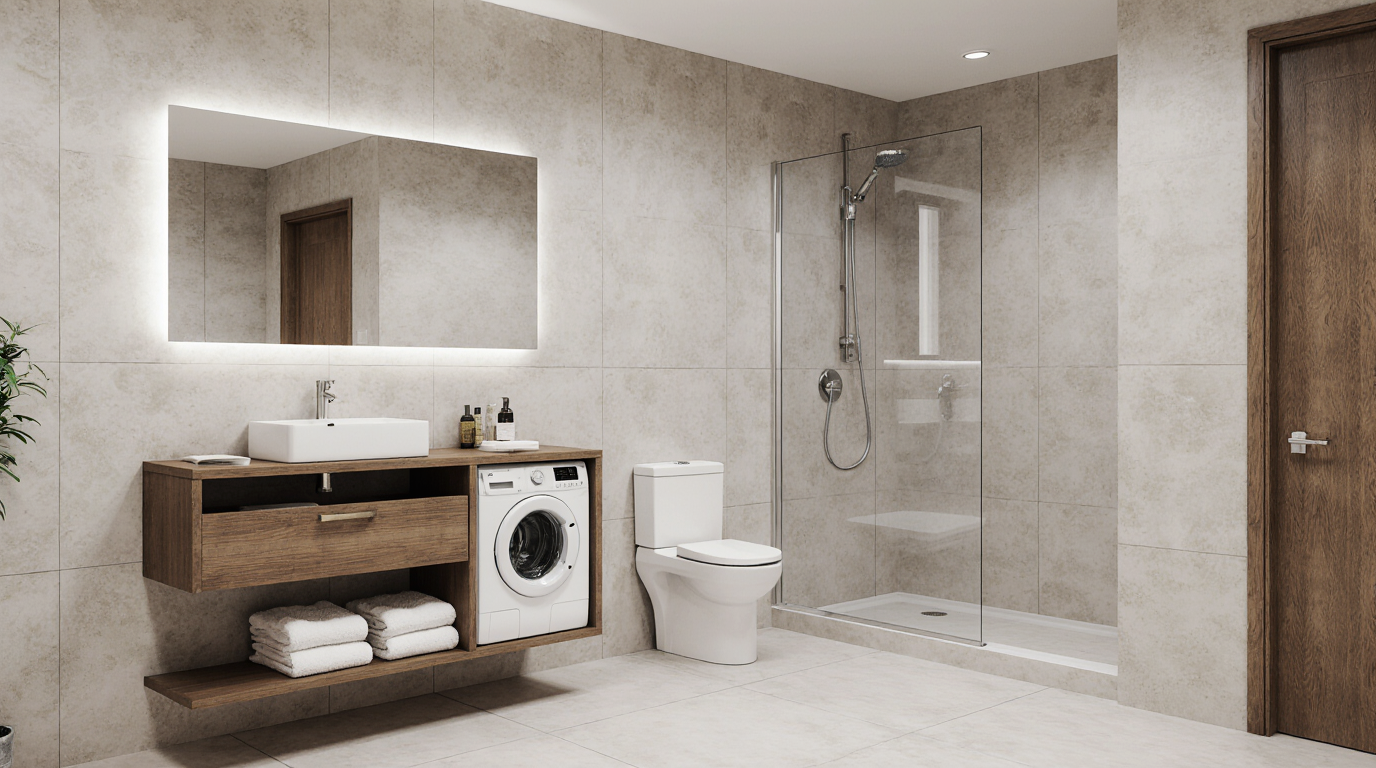
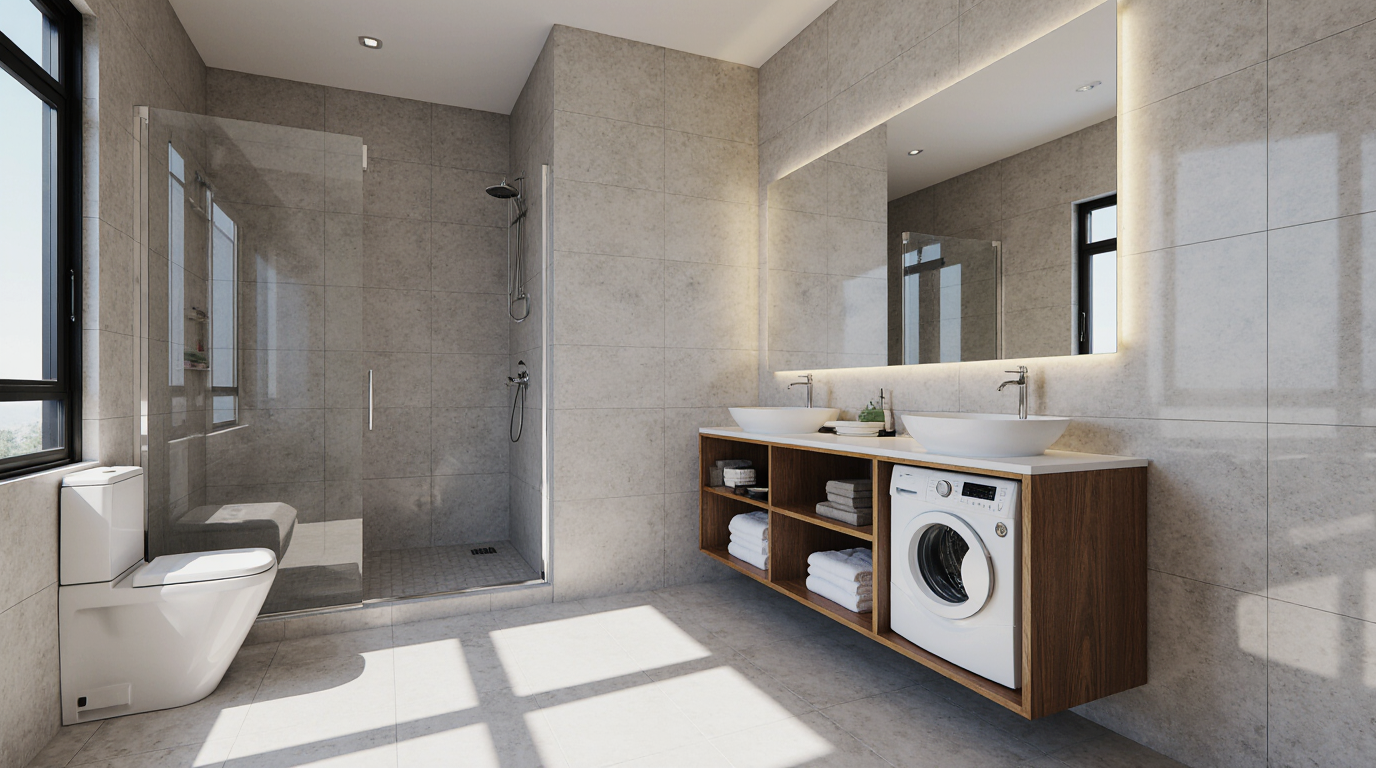
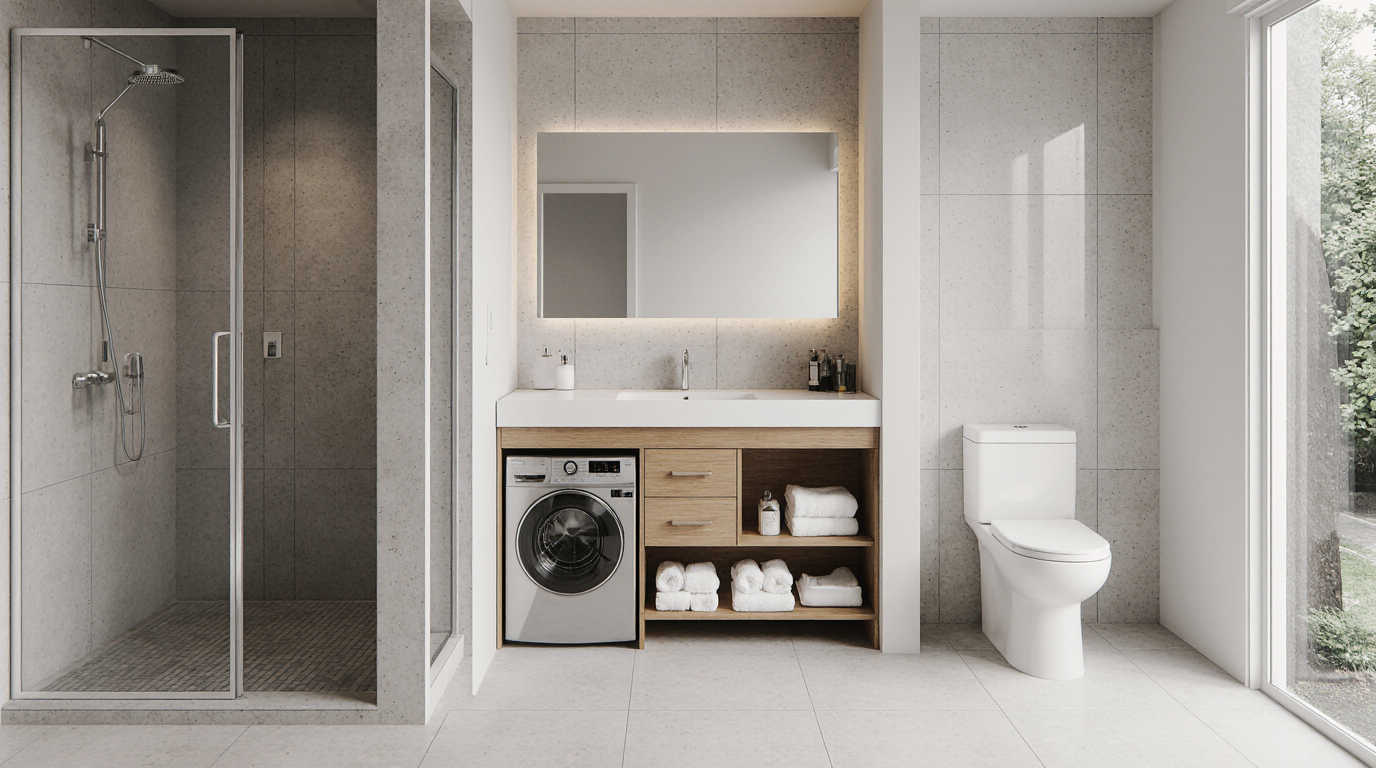
Efficient storage is a cornerstone for a bathroom-laundry combo. Both areas require well-planned storage for necessities ranging from personal care items to laundry products. Modern cabinetry and custom shelving systems can cleverly conceal appliances while providing ample storage. Designers frequently utilize vertical space to incorporate tall cabinets, maximizing the available room. Every detail, from concealed drawers to compartmentalized shelves, contributes to a harmonious, functional design.
The design’s style must complement its functionality, Blending finishes and palettes carefully elevates the dual-purpose environment. Light, muted colors create the illusion of spaciousness while maintaining calm aesthetics. Tile choices are another area where design and functionality converge; water-resistant and easy-to-clean surfaces enhance durability while contributing to the overall style. Artistic tiles, including mosaics or raised textures, enrich the visual narrative. Even small touches, like accent tiles behind the sink or subtle mosaic designs, can elevate the visual impact of the room.
Layered illumination plays a crucial role in enhancing usability and style. Well-planned lighting supports chores, prevents accidents, and accentuates design features. Multiple light layers, including ambient, task, and accent options, optimize the space’s usability and atmosphere. For example, LED strips under shelves or cabinets not only add a modern touch but also improve practicality when performing chores like folding clothes or preparing personal care routines. Designers also emphasize the use of natural light whenever possible, as it enhances mood and reduces reliance on artificial lighting during the day.
Proper ventilation safeguards both health and appliances in dual-purpose spaces. Managing humidity and dampness is essential to avoid structural or health issues. High-quality exhaust fans or strategically placed windows help maintain a fresh environment. Advanced ventilation systems can also regulate humidity and temperature, protecting both the structural integrity of the room and the longevity of appliances. Supplementary measures, such as moisture barriers and dehumidification, are recommended.
Energy and water-efficient strategies are central to contemporary bathroom-laundry planning. Modern plumbing innovations combine efficiency with practicality. Appliance selection favors high-efficiency machines to reduce environmental impact. Some designers even incorporate smart technology, enabling homeowners to control water usage, monitor laundry cycles, and automate lighting for maximum convenience. Eco-friendly and tech-forward strategies offer both practicality and sophistication.
Organized operational design is critical for maintaining comfort and efficiency. Optimizing work zones improves daily tasks and supports organization. Combining horizontal surfaces with vertical appliances creates practical, multifunctional zones. A mix of visible and concealed storage balances accessibility with aesthetics. By anticipating daily routines and user habits, the space becomes more than just functional—it transforms into a practical yet elegant hub that supports an organized lifestyle.
Ensuring safety is a priority when integrating bathrooms and laundry areas. Wet floors, electrical outlets near water sources, and heavy appliances require careful attention to design standards and building codes. Safety-oriented finishes and hardware reduce risks without compromising design. Protective measures are elegantly integrated to preserve the room’s beauty. The result is a space that feels secure, comfortable, and modern, giving homeowners confidence in their day-to-day activities.
Tailored aesthetics make the space uniquely aligned with the user. Personal touches, including bespoke furniture, distinctive materials, and creative decor, enhance character. Decorative focal points transform mundane tasks into pleasurable experiences. A careful mix of pattern, color, and material produces visual balance and a serene experience.
Dual-purpose design ensures long-term functionality and value. Compact, adaptable rooms meet both current and future demands efficiently. Strategic modular solutions sustain usability and elegance over time. Integrated design proves that efficiency and style can seamlessly coexist.
Successful integration demands a holistic approach to design, balancing functionality, aesthetics, and ergonomics. Professional input guarantees that layout, materiality, and usability form a seamless whole. When executed correctly, the space merges efficiency, comfort, and style, turning chores into a streamlined, aesthetically pleasing activity.