The laundry room, no longer a neglected or purely functional afterthought, has undergone a major aesthetic upgrade. It is currently seen as a key, highly utilized area, a place where the practicality of washing and folding can be enjoyed in a beautiful setting. The focal point of any well-designed laundry space is the countertop. It serves a purpose far beyond simple surface area; it functions as the central hub, the designated spot for pre-treatment, the essential surface for pressing and folding clothes, and, critically, a major canvas for design expression. To create a countertop that is both exceptionally useful and visually appealing, careful consideration must be given to both its base material and its adornment.
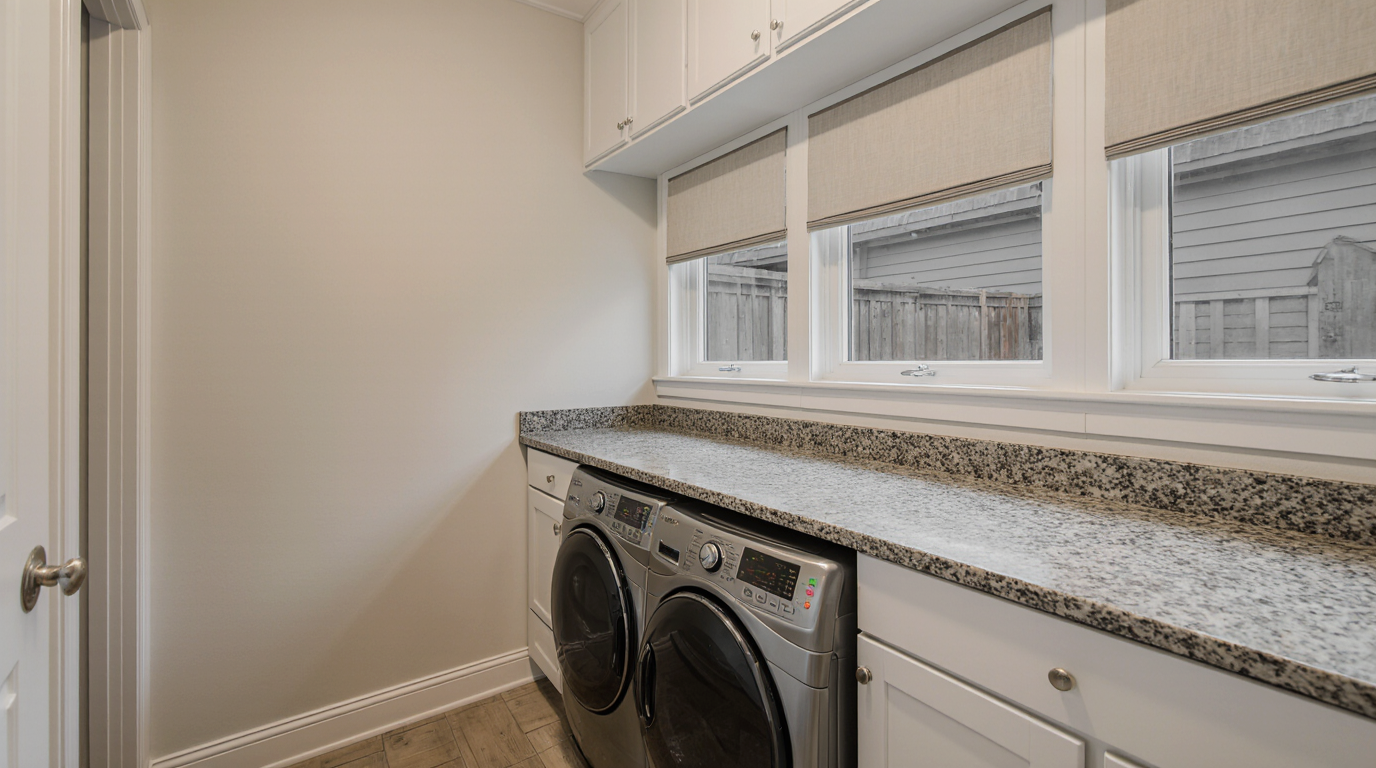
The foundation of any successful counter design is the chosen substrate. In the high-moisture, high-traffic setting of a utility room, materials must demonstrate superior toughness to withstand accidental spills, continuous use, and heavy containers. Quartz has emerged as a top-tier contender for contemporary utility spaces. This durable product mimics the beauty of stone like granite while simplifying the necessary care regime. Its non-porous nature is a significant advantage, effectively resisting stains from bleach, detergent, or fabric softener, and it requires no regular sealing maintenance, which is ideal for a frequently utilized surface. The consistent performance and longevity of quartz make it a smart investment, often lauded by design experts for offering luxury aesthetics with minimal upkeep.
For those seeking a warmer, more organic feel, butcher block provides an instantly inviting and softer counter option. Wood countertops, particularly hardwoods like maple or walnut, bring an natural element that beautifully counteracts the industrial feel of metal and porcelain. With the correct application of a protective finish, which requires occasional renewal, they handle the rigorous use of a folding station admirably. The beauty of butcher block is its repairability; minor scratches or water rings can often be sanded out, restoring the surface. This material choice speaks to a more rustic, farmhouse, or organic modern aesthetic, contrasting beautifully with stainless steel fixtures or crisp white cabinetry. The strategic use of this organic material ensures the room maintains a residential, welcoming character rather than a sterile one.
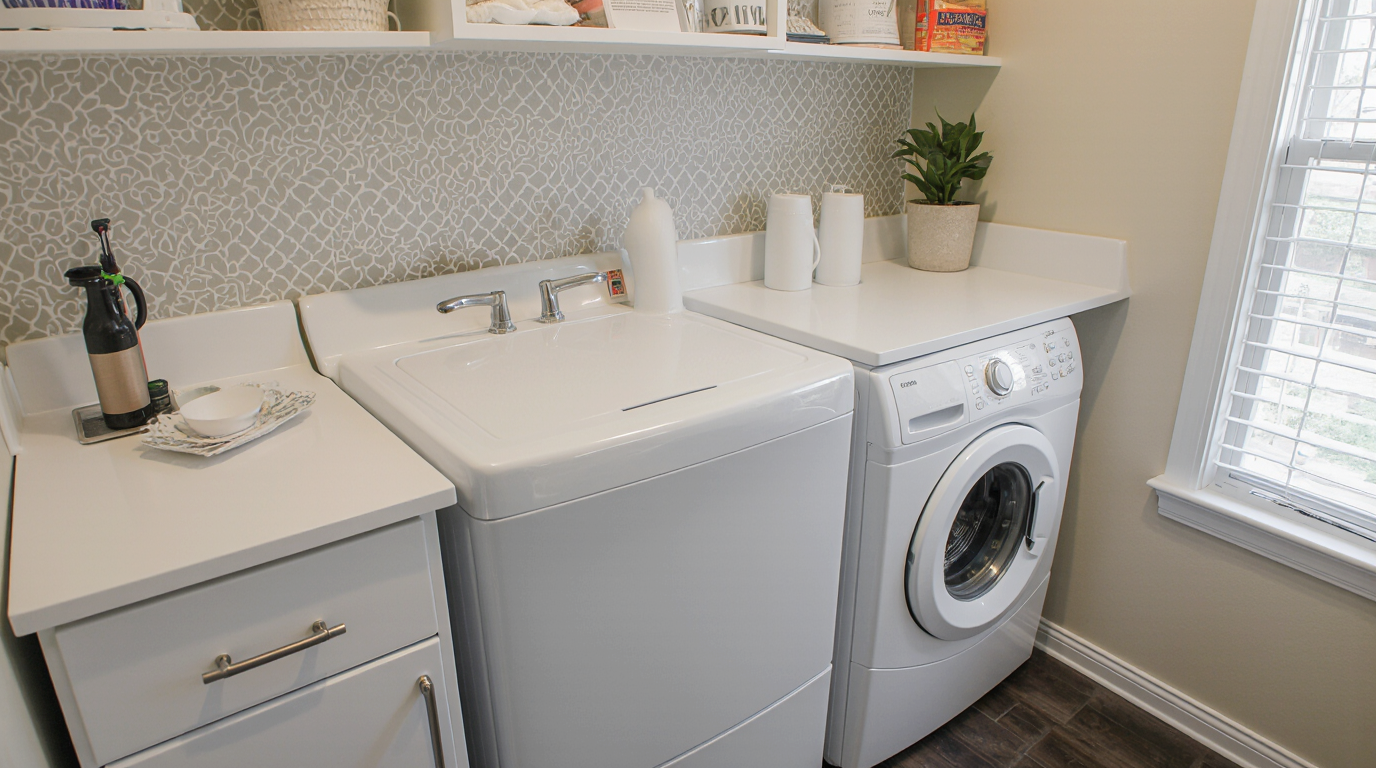
Lesser-known but highly practical options include solid surface materials, like those based on acrylics, which offer a fluid, continuous design, as the seams are extremely discreet, creating a visually perfect, singular plane. For budget-conscious projects that still demand resilience, high-quality laminate has seen major advances, now presenting a huge range of styles, like extremely realistic faux-stone or wood grains, for significantly less expense. The primary difference to note is its lower tolerance for direct heat and potential for surface damage versus quartz or granite.
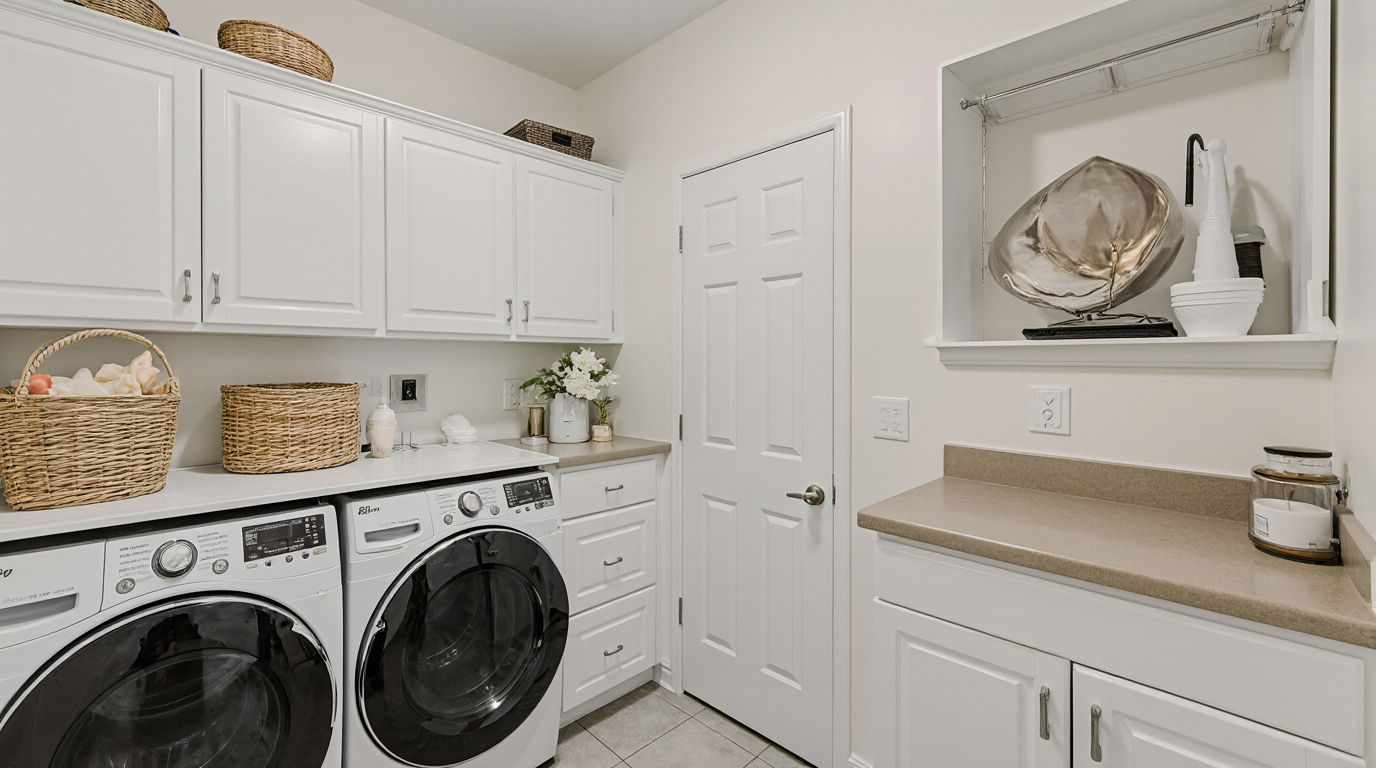
Once the foundational material is selected, the true art of counter decor begins. The goal is to introduce visual interest and organization without sacrificing precious workspace. A key principle for this area is maximizing vertical space. If the countertop spans the top of front-loading machines, that surface needs to stay open to allow for the smooth completion of laundry tasks. Therefore, decorative elements should be carefully chosen to be stable or easily relocated.
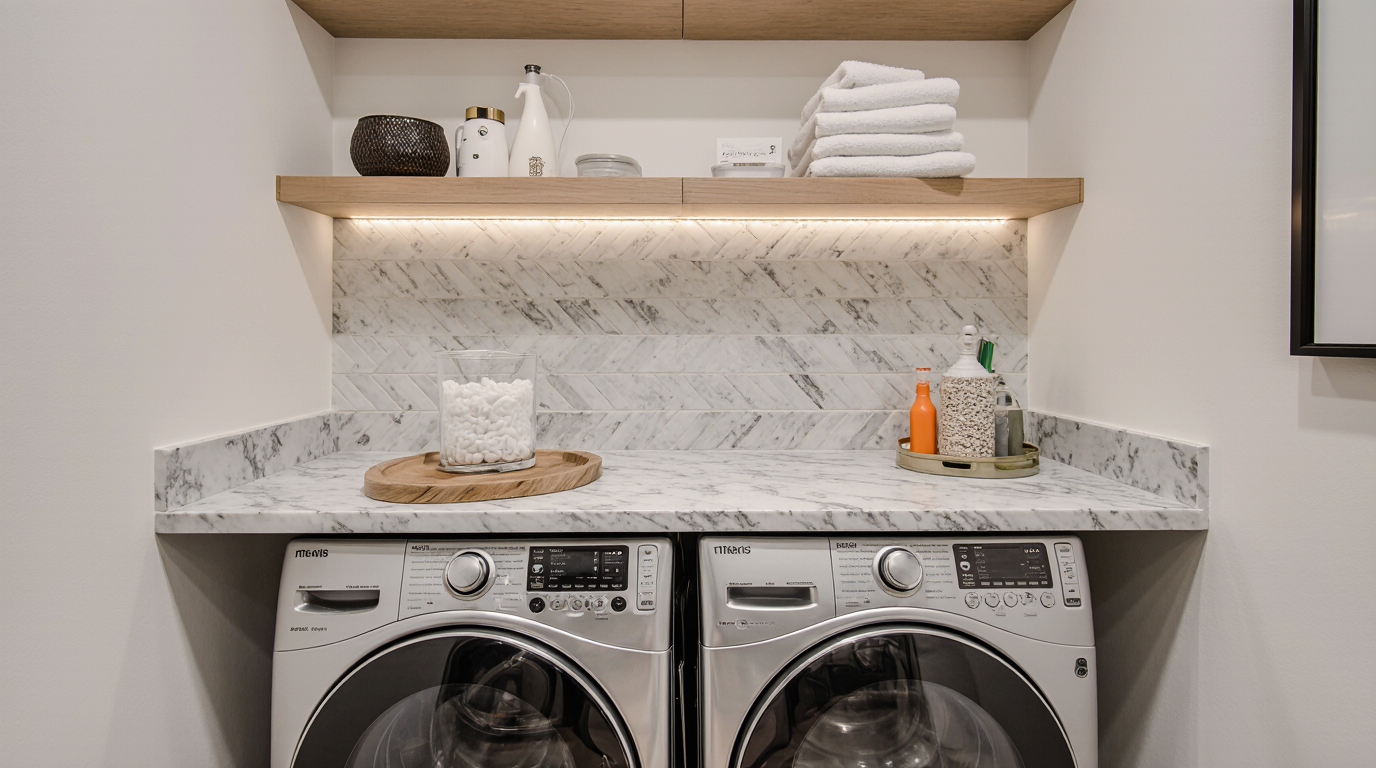
Consider curated storage vessels as your primary decorative medium. Rather than displaying bulky, branded plastic, transfer detergents and supplies into coordinated, aesthetically pleasing dispensers. Clear glass canisters filled with items like dryer balls, clothespins, or even colorful laundry pods become miniature sculptural elements. For a touch of sophisticated style, opt for beautifully textured ceramic or sleek metal boxes for small items like stain removers. Ensure these accessories harmonize with your room’s color scheme—you might blend light neutrals for a clean feel or introduce richer, contrasting colors for depth and personality. The concept here is intentional display; every visible item must contribute positively to the room’s aesthetic.
Trays and catch-alls are indispensable tools for countertop control. A visually appealing, shallow platter, perhaps a ceramic or textured plastic piece, acts as an instant home for necessities like fabric sprays, stray coins (inevitable in laundry!), and dryer sheets. This technique provides the necessary grouping that prevents small items from looking like clutter. The convenience is clear: when the counter needs to be fully utilized, the tray allows you to swiftly clear all accessories, leaving a pristine surface. This balance between active use and styled rest is the hallmark of expert design.
The area above the counter, often overlooked, plays a huge role in the perceived decor. The backsplash, if you have one, provides visual interest. A richly veined porcelain tile or a unique geometric pattern acts as a built-in piece of wall art that frames the horizontal surface below. If your setup allows for open shelving just above the counter, this provides a further chance for thoughtful styling. Use this space to display decorative items that are utility-adjacent—a beautiful vintage scale, framed botanical prints that evoke clean scents, or stacks of neatly folded, unused hand towels that add textural depth. This layering adds dimension and personality, transforming the area from a simple workstation to a thoughtfully designed service station.
For specialized tasks, consider the flexibility of mobile organizational units. A narrow, wheeled trolley positioned next to the counter can store extra supplies or function as a provisional stand for the iron. When it’s time to iron, it rolls out, providing an auxiliary surface, and then tucks away, leaving the main countertop clear. This dynamic approach honors the reality of small-space living while ensuring that high-level aesthetic standards are maintained. The countertop is the stage; its decor sets the mood for an otherwise mundane chore, turning laundry day into an exercise in organized, beautiful efficiency. The success of a laundry room design is clearly visible in the skillful execution of this key surface—from its material choice to its final adornment.