The modern utility space has become much more than a mere chore spot; it is far removed from the basic utility closet housing noisy appliances. Presently, this area functions as a key component of the residence, a room requiring careful structural consideration and sophisticated interior design. Creating a truly elegant laundry space means harmonizing peak functionality with premium design elements, transforming required work into a more delightful process. This successful redesign depends on precise forethought, beginning with the core principles of maximizing the footprint and the intentional choosing of top-tier finishes.
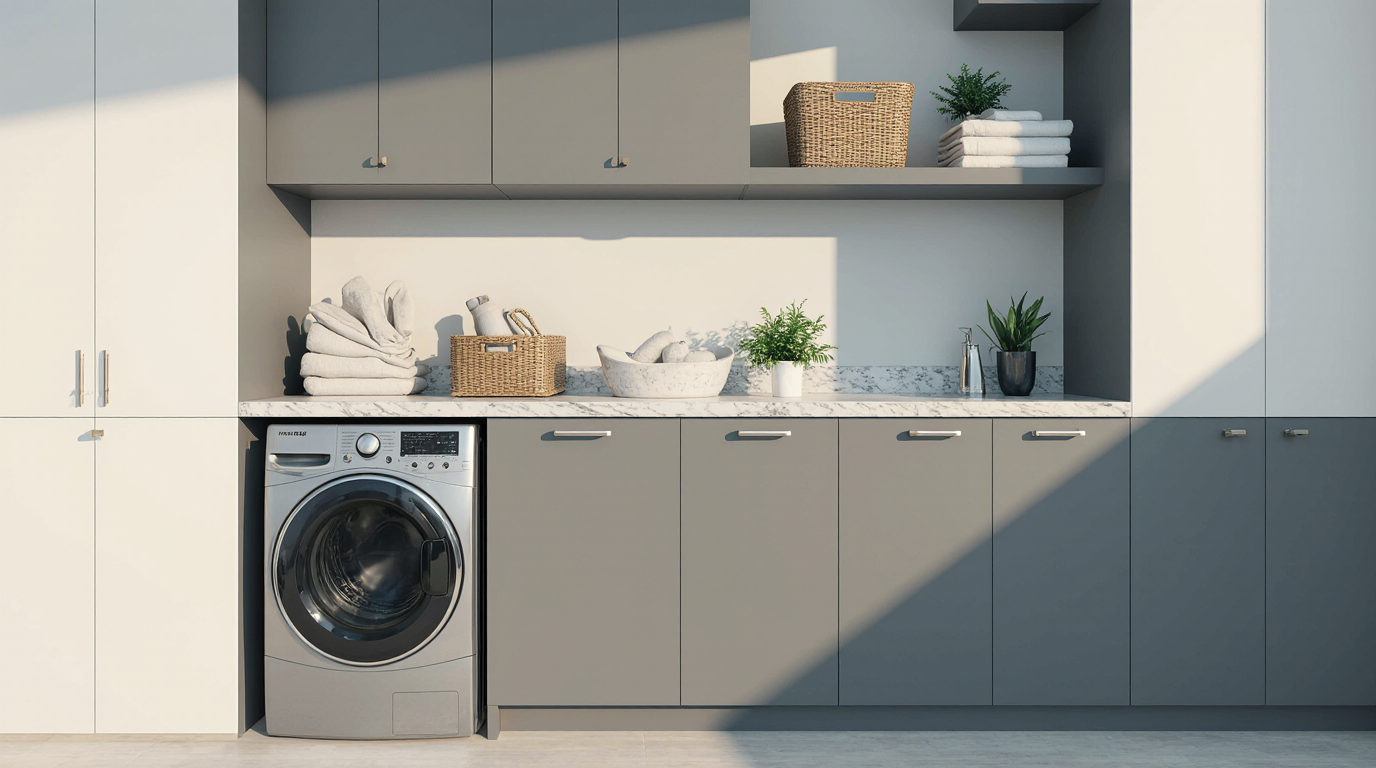
A key distinguishing factor between a basic utility room and a truly refined one is the investment in tailored storage solutions. Dismiss generic, readily available storage units; an upscale laundry area features floor-to-ceiling units crafted from select, durable timber or robust, specialized engineered wood with sophisticated finishes. Consider clean-lined, contemporary flat-panel fronts, integrated pull-out hampers that conceal dirty linens until wash day, and purpose-built compartments for cleaning products, delicate tools, and pressing supplies in an orderly, sealed environment. The selection of knobs and pulls is instrumental in defining opulence; choosing sleek finishes like aged bronze, satin brass, or dark iron handles immediately enhances the overall aesthetic and perceived quality.
The surface material choice represents a further opportunity where utility merges with aesthetic sophistication. Although a laminated surface is budget-friendly, genuine luxury demands a solid material such as quartz, granite, or even marble, provided they are properly sealed against potential water damage. Such premium materials ensure longevity, are easy to clean, and create a broad, seamless area ideal for garment preparation—a key component of ergonomic design. A large, recessed wash-up sink, perhaps featuring a high-arc, commercial-style faucet in a complementary metal finish, brings an element of high-functioning utility while preserving the room’s sleek visual coherence.
The impact of illumination is often overlooked but is critical for both function and atmosphere. A truly elegant laundry room moves beyond a single, harsh overhead bulb. Rather, the design employs a combination of light sources. This typically begins with bright, high-CRI (Color Rendering Index) overhead fixtures to ensure true color representation when sorting whites and colors. This is enhanced with subtle linear task lighting placed beneath the upper units to brighten the key working plane uniformly, preventing dark spots. For a small artistic flourish, consider installing a small, decorative pendant light over the sink area, treating it as a jewel in the room.
The choice of flooring dictates much of the room's overall feel. Even though durability and moisture-proof qualities are non-negotiable, the aesthetic impact cannot be ignored. Broad, expansive man-made tiles simulating marble veining or reclaimed timber, usually utilizing low-porosity, high-density construction, deliver an uninterrupted visual plane that makes the room feel larger. For homeowners seeking a more artisanal touch, graphic encaustic tiles can introduce an eye-catching geometric or Moorish style that transforms the space into a visual destination. The joins between the tiles should be thin or blend in with the surrounding color to maintain visual continuity.
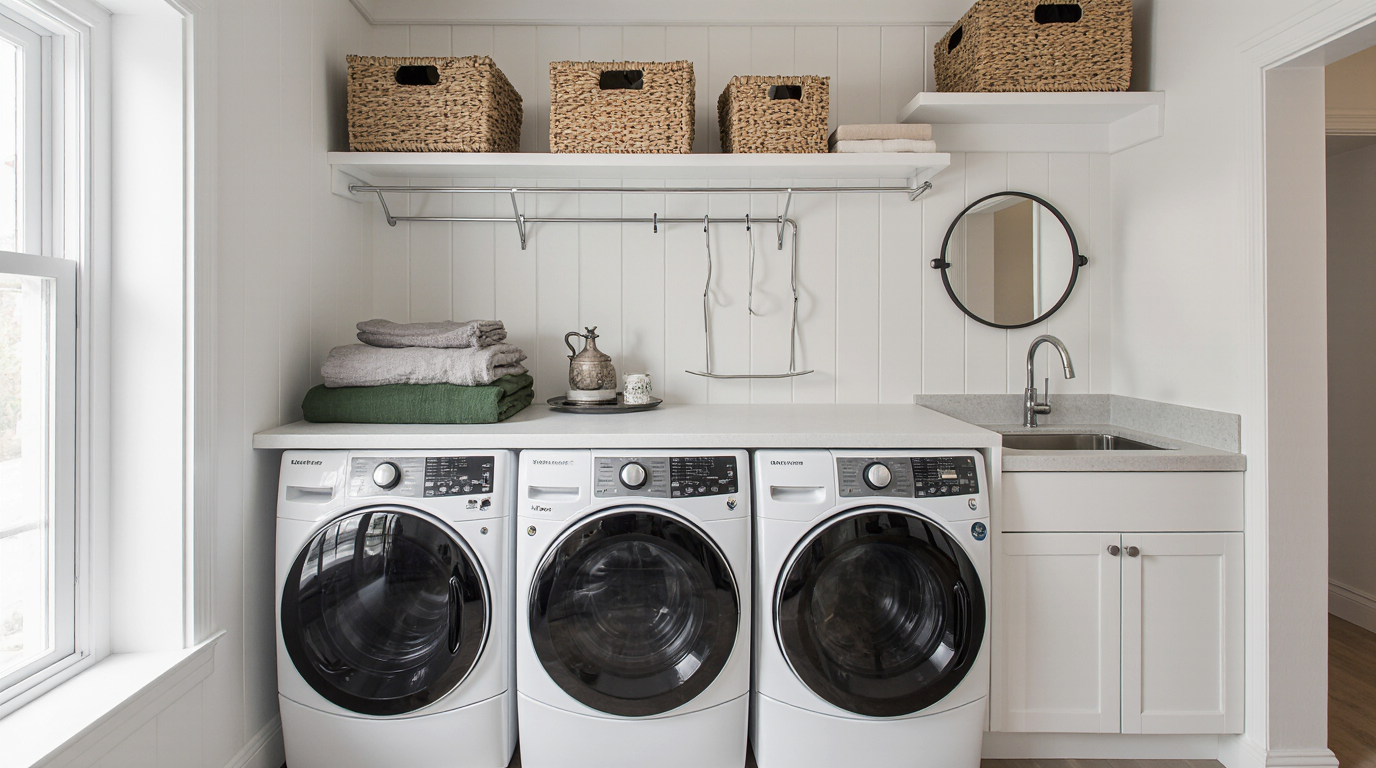
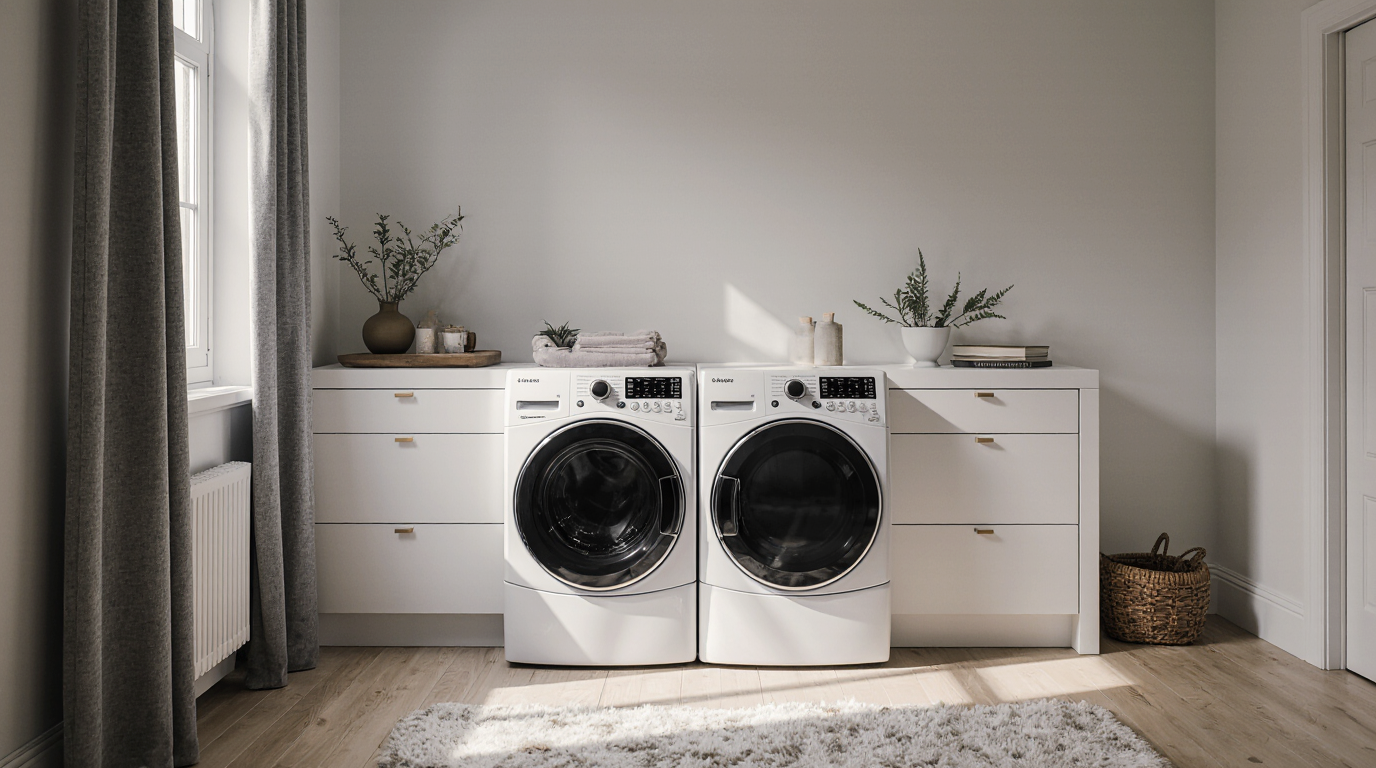
Appliance integration is where modern design truly shines. Moving away from the look of bulky, standalone units, consider housing them within custom millwork that creates a built-in furniture effect. If space planning is a priority, specify vertically arranged appliances to conserve precious square footage, or opting for sleek, front-loading models arranged side-by-side. The trend toward smart appliances that offer app-controlled cycles and energy monitoring contributes not only to convenience but also to a highly managed, efficient utility area.
Utilize the upward dimension to boost capacity. Going further than conventional overhead units, incorporate features like a sliding drying rack that drops down from the ceiling when needed and is hidden completely when its function is complete. Sturdy rails installed directly under the wall-mounted units facilitate the quick transfer of pressed or delicate garments, cutting down on necessary post-laundry finishing work—a significant workflow improvement. For minor essentials, built-in compartments for lost socks, fabric softener sheets, and clips add that final layer of organizational mastery.
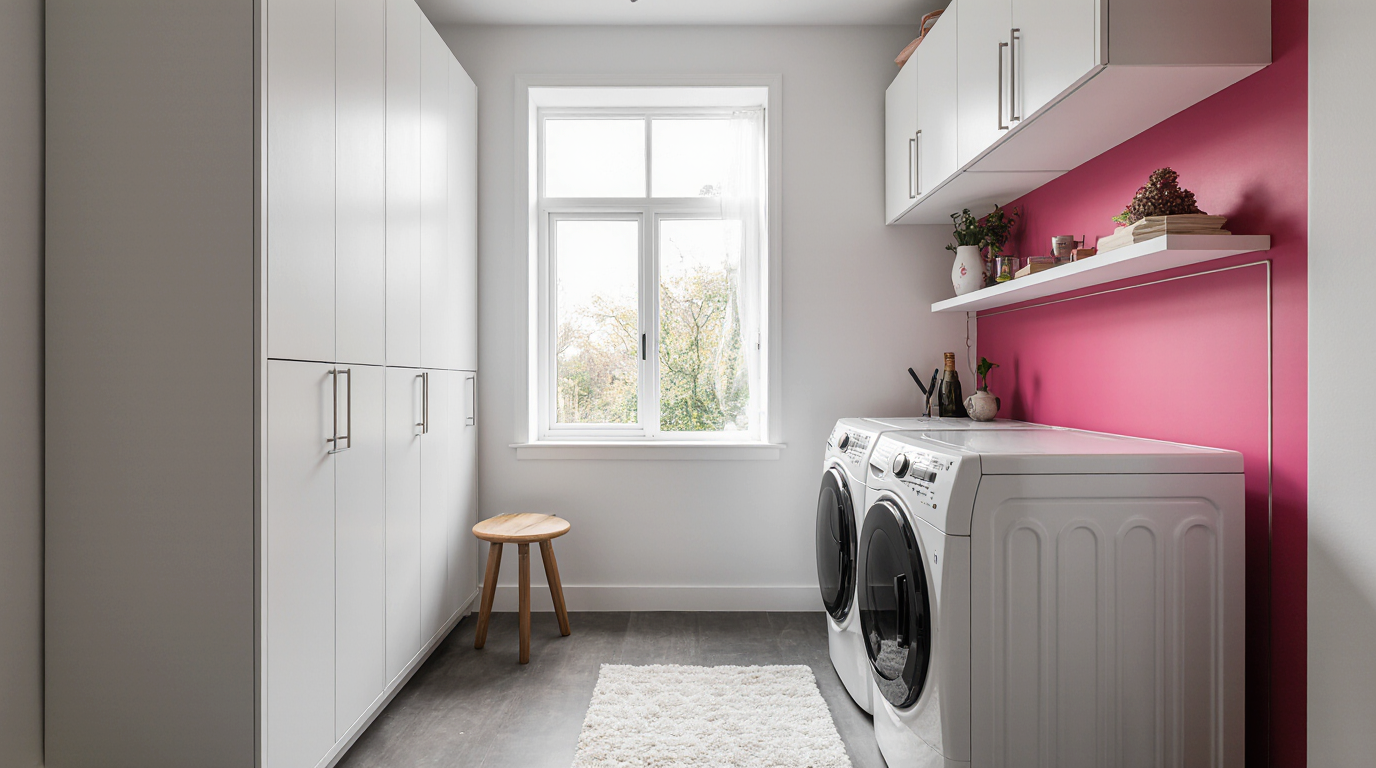
The atmosphere of an elegant laundry room should promote a sense of calm, not chaos. This is accomplished by selecting a well-thought-out range of tones. Warm neutrals, soft grays, muted blues, or deep charcoal tones provide a backdrop of understated luxury. Accents can be introduced through textiles, such as a patterned runner rug made of durable, low-pile material, or through the inclusion of decorative baskets made of natural materials like wicker or woven seagrass. These elements soften the hard lines of the machinery and cabinetry, contributing a feeling of tactile richness and a hint of calming retreat.
Crucially, never neglect the details that personalize the space and embrace its function without being overtly utilitarian. A small, built-in ironing station that slides out from a narrow cabinet or a purpose-designed cupboard with airflow for a standing clothes steamer shows a commitment to detail. The inclusion of small, beautiful objects—a framed print, a luxury scented candle, or a delicate arrangement of real or artificial flowers—indicates that the space has been styled with the same care as the main residential zones. This comprehensive strategy, uniting practical design with premium material application, is the blueprint for creating a truly unforgettable and elegant laundry room that acts as a valuable and functional extension of the property.