The laundry room, often relegated to a hidden nook or a tight service zone, is swiftly evolving in contemporary home architecture. It is shifting from a strictly utilitarian area into a real part of the home's aesthetic, requiring design sophistication even in its most small spaces. For designers and residents tackling the difficulty of the small laundry room, the single most significant, yet frequently ignored, element for bringing individuality and perceived spaciousness is the wall paper. Picking the correct wall finish is a critical decision that proceeds beyond mere utility; it becomes an activity in aesthetic structure to counteract space constraints. This detailed dive examines the expert considerations for choosing tiny laundry space wall covering that sticks to Online Ad Advertising rules by providing one-of-a-kind, expert, and useful perspectives, guaranteeing the room feels planned, stylish, and undeniably personal.
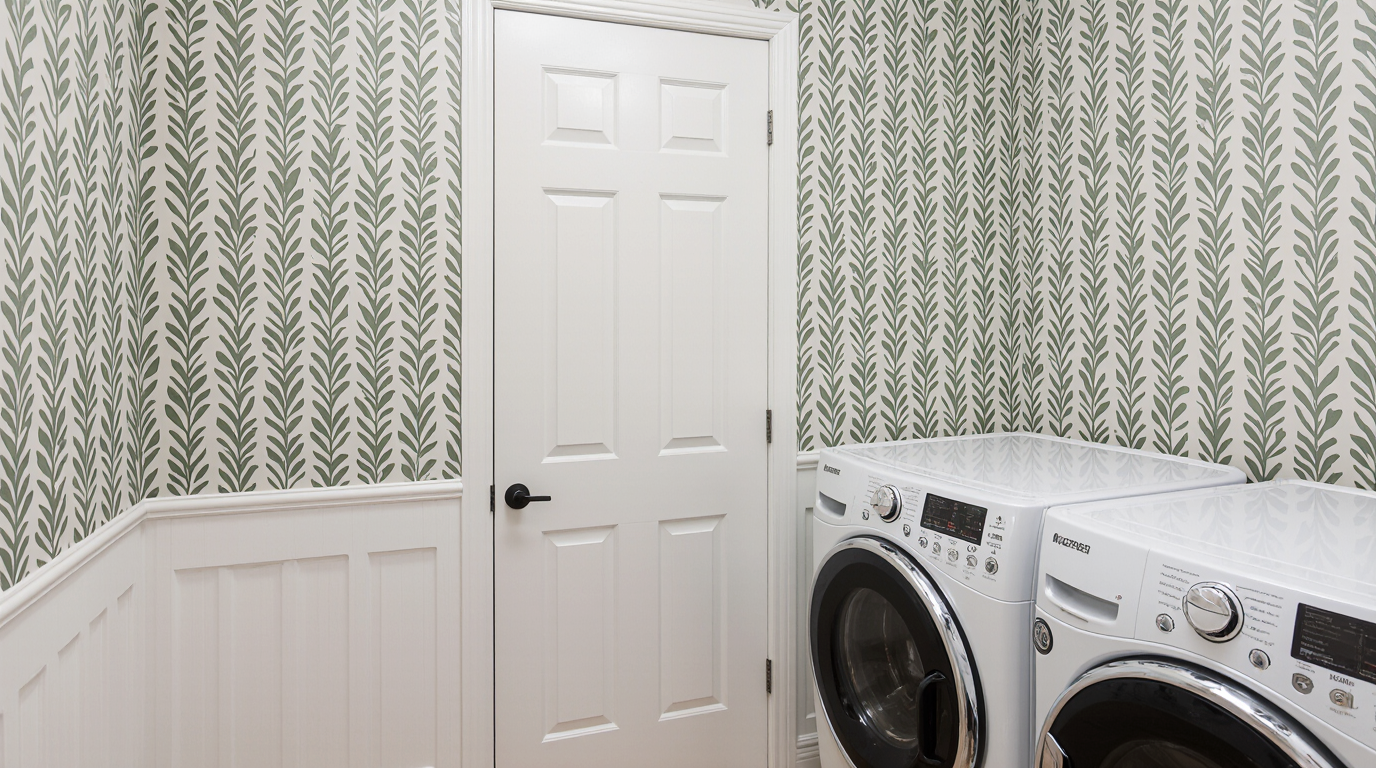
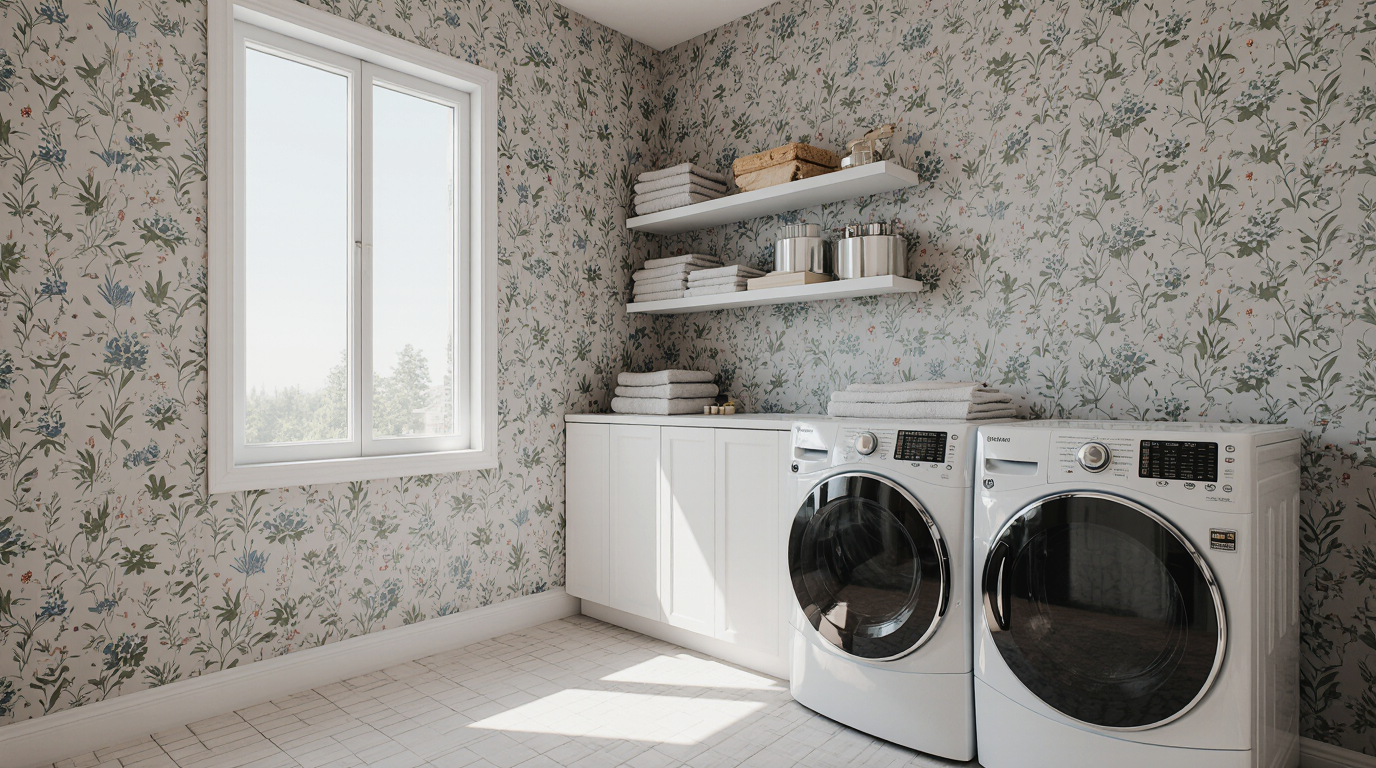
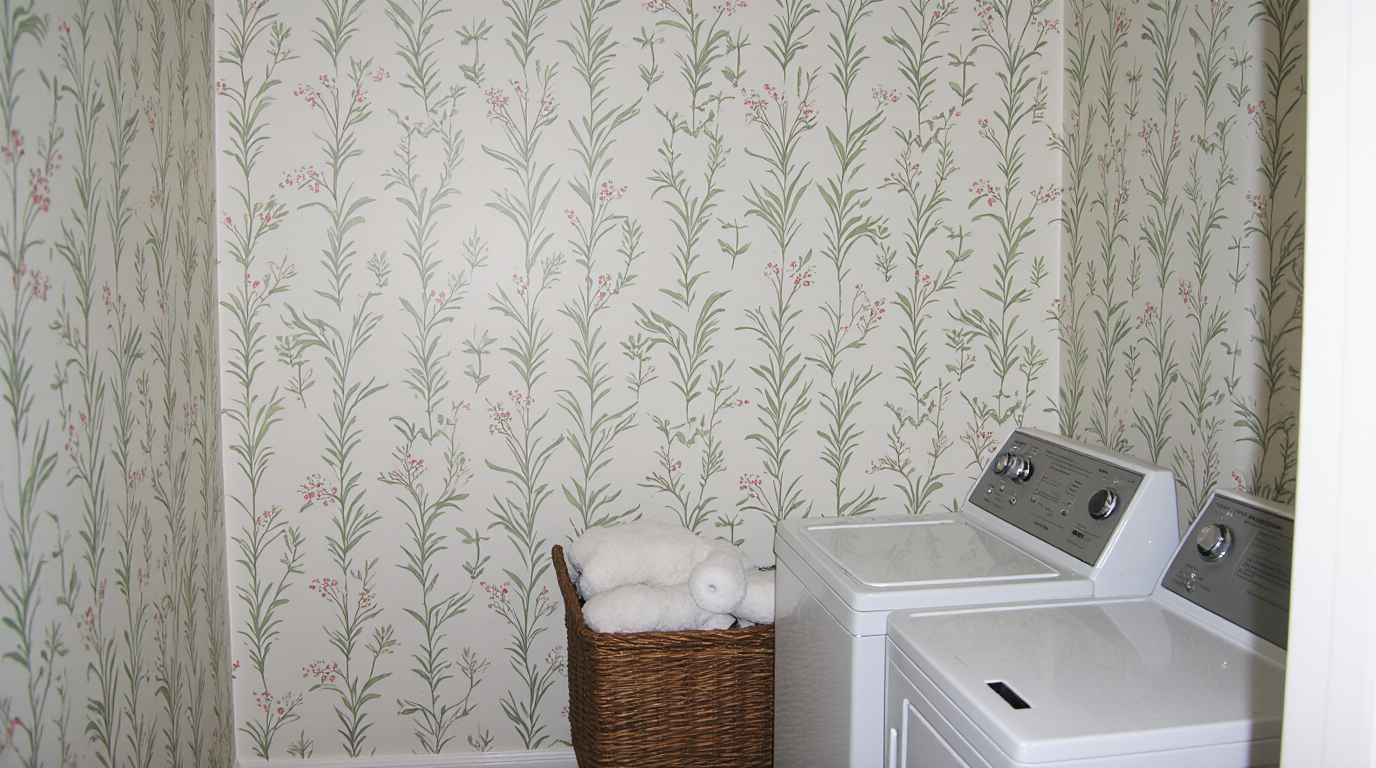
When space is the chief constraint, decorators must utilize pattern proportion and shade principles to establish an illusion of recession. A usual mistake in tiny areas is the fear of motif, causing to dull, functional finishes. This is a injustice to the possibility of the space. The solution resides in adopting big, yet open or airy motifs. Imagine about botanical patterns with large blank area, where the underlying color dominates, allowing the gaze to move without being interrupted sharply by thick patterns. A broad-band wall paper, applied judiciously, can greatly change the apparent verticality or width of the space. For a slim room, vertical lines will aesthetically stretch the surfaces, pulling the gaze upward to the ceiling, which in order can make the full space feel taller—a vital area control technique. On the other hand, for a very four-sided space, a slightly different across pattern can inspire the vision to move over the extended measurements. The goal is constantly to form a feeling of continuous visual continuity.
Component picking is essential in a laundry area, as it is a space prone to moisture and potential sprays. While old-fashioned paper wall papers might give in to humidity, the rise of vinyl-coated or pre-glued, strippable alternatives offers resilience paired with aesthetic adaptability. Premium plastic coating is wipeable, waterproof, and incredibly simple for the home-improvement lover, matching ideally with the requirement for functional grace. For zones directly near the laundry unit and tumbler—the wet space—evaluate ceramic or a shiny surface, moisture-proof paint for the bottom portion, utilizing the extra detailed wallpaper just above the tile edge or on walls most distant from the appliances. This tiered method respects the utility needs while maximizing aesthetic effect.
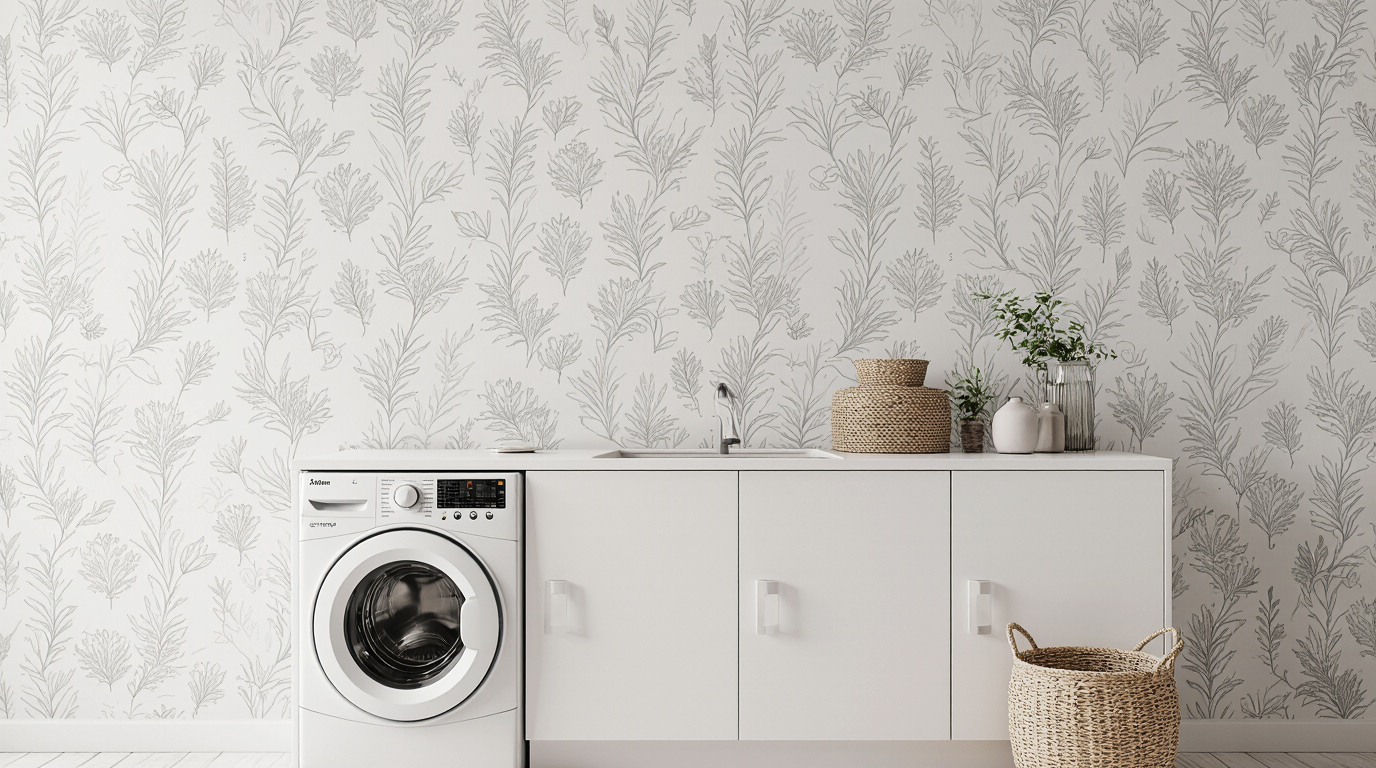
Hue effect plays a strong function in tiny space decor. Pale and calm tones, such as pale blues, muted greens, or also elegant off-whites with subtle feel, are perennial favorites because they throw back light, making the limits of the space pull back. Nonetheless, striking, saturated shades can be used well for an unforeseen design impact. This plan works by taking on the compact extent instead of of struggling against it, changing the room into a intentionally comfortable, rich corner. This approach necessitates pairing the vibrant surfaces with highly functional, light-colored storage, and brilliant focused lamps. The juxtaposition of vibrant hue and practical illumination is a hallmark of master small-space design.
Texture in wallpaper introduces one more layer of perceptual charm and optical interest, which is essential when decor are basic. Tactile wall coverings, such as those mimicking fabric, grasscloth, or even delicate patterned weaves, give substance without counting on abrupt shade variations. Woven Matting, for instance, offers an earthy, sophisticated background that wonderfully diffuses light, lending a soft glow to the space that improves the sense of freshness and lightness. This selection leans into natural material aesthetics, a present craze in home architecture, that cherishes tactile planes. When combining these textures, don't forget the principle of visual substance: offset a intensely surface-rich surface with smoother planes on neighboring finishes or cabinetry to maintain optical harmony and prevent drowning the small room.
Motif patterns should as well be picked with the room's exact purpose in thought. For a true laundry sanctuary feel, subtle matching-shade motifs or classic geometric prints give a enduring appeal that withstands fast craze obsolescence. Look at little, repeating clover-like or curving patterns in a muted color scheme; these traditional shapes offer support without requiring constant focus. If the space serves as as a small mudroom, including a design that suggests at the exterior, like a stylized leaf or vine motif, can bridge the linking area amongst the outdoors and the chief dwelling spaces. This shows comprehensive house architecture ideation, uniting different utilitarian spaces via consistent optical communication. The toughness of the material must handle the foreseen strain, especially near entrances or lounge spaces.
The putting up of the wall covering itself alone deserves expert thought in a tight area. If the space is truly tiny, maybe just a sole focal surface —the one directly opposite the entry —should get the treatment. This main area pulls the vision instantly upon arrival, establishing the design goal, while the other walls can be coated a complementary, paler color that copies the underlying of the wall paper. This rule of proportion in surface treatment stops design too much and keeps the emphasis on the design anchor. Furthermore, make certain that any fitting placement—like sconces or shelving brackets—is scheduled before mounting, as shaping around fixtures in a cramped area can readily cause to messy work, undermining the despite that professional result.
Not ever underestimate the strength of the border and fittings difference. No matter how vibrant the wall covering, the nearby parts must anchor the decorative. Clean, light white edging bordering the walls, entrances, and openings establishes a necessary aesthetic buffer, allowing the wallpaper pattern pop while enclosing the area neatly. Similarly, picking fixtures for cupboards or functional hangers in a different alloy look —perhaps dull black against a airy and airy design, or glossy alloy against a deep one—introduces necessary architectural element and raises the complete aesthetic theme. In a tiny laundry room, all part must function extra hard, and the right wall paper, picked with an master eye for scale, substance, and location, is the silent workhorse that transforms daily tasks into refuge.