Small Laundry Room Design: Transforming Compact Spaces into Functional Luxury
Creating an efficient small laundry space requires blending ingenuity, functionality, and visual charm. Every inch of space must be utilized strategically, transforming a simple utilitarian area into a functional and stylish part of the home. A well-designed laundry room is not just about practicality; it can significantly enhance the overall value of a home while providing a comfortable and organized environment for daily chores. Essential elements for an effective small laundry layout include optimized storage, advanced appliances, and visual techniques that enhance space perception and style.
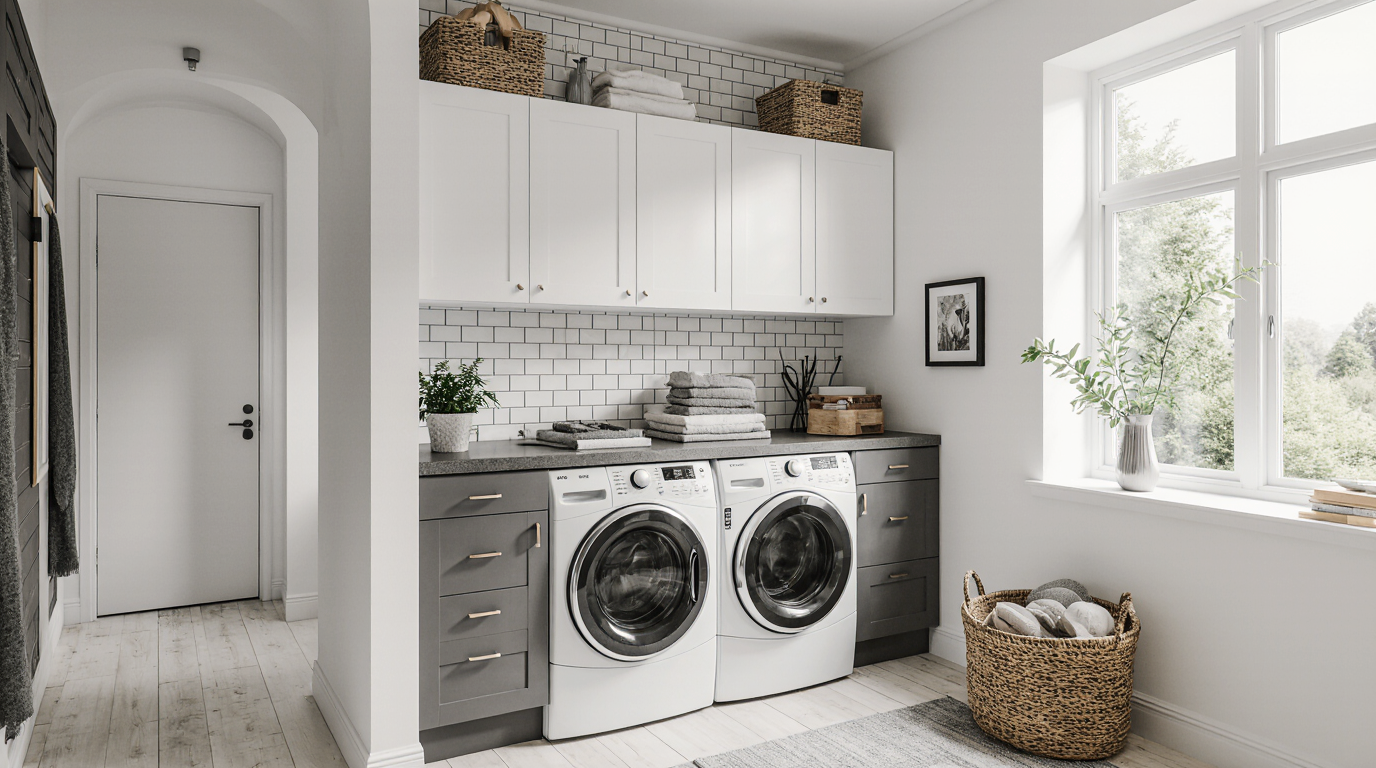
Appliance arrangement is crucial in tight laundry areas. Stackable laundry machines optimize vertical space, leaving more room for functional surfaces and organizational solutions. Choosing energy-saving, high-performance washers and dryers enhances both efficiency and convenience. Custom cabinetry integration ensures appliances blend smoothly with the room’s aesthetic, creating a clean, unified appearance. Designers often recommend custom cabinetry around stackable units, which can house detergents, fabric softeners, and cleaning supplies in neatly organized compartments, reducing clutter and enhancing usability.
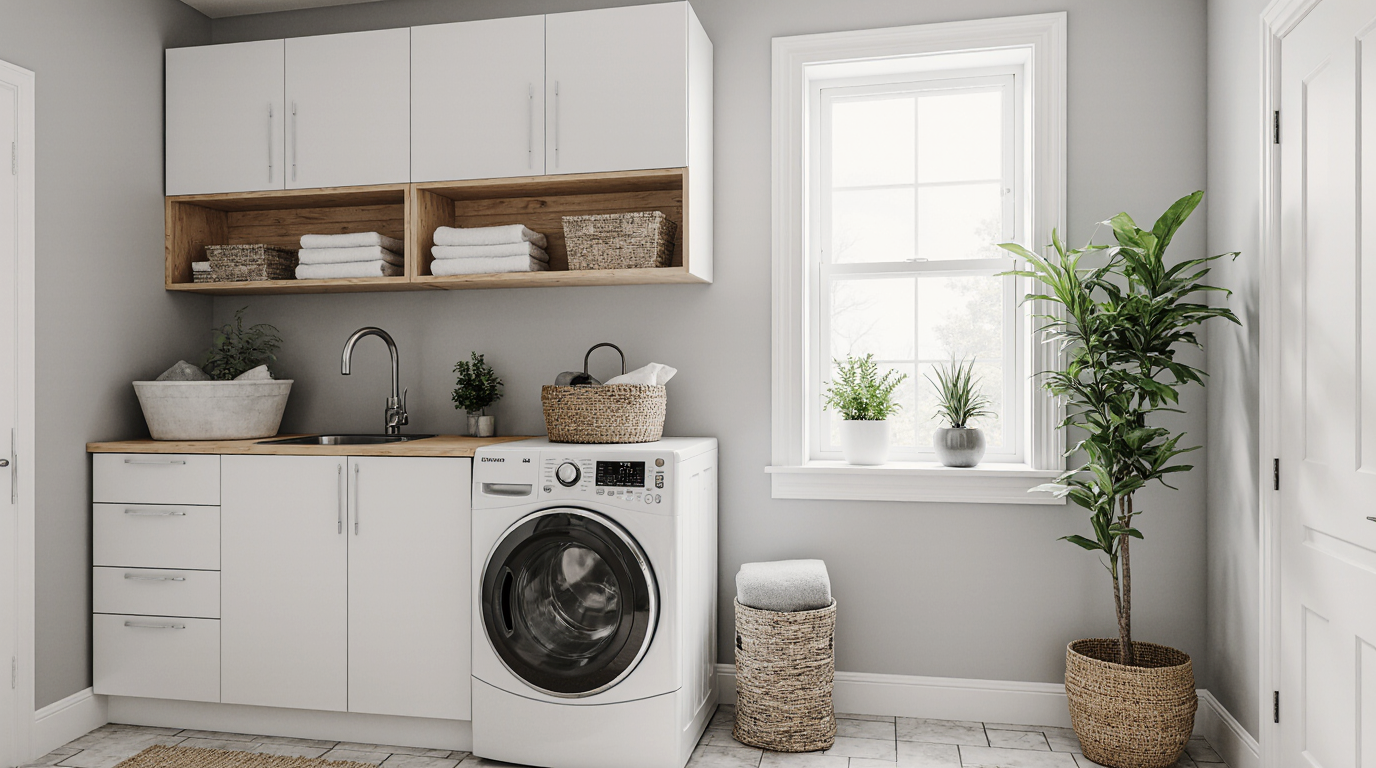
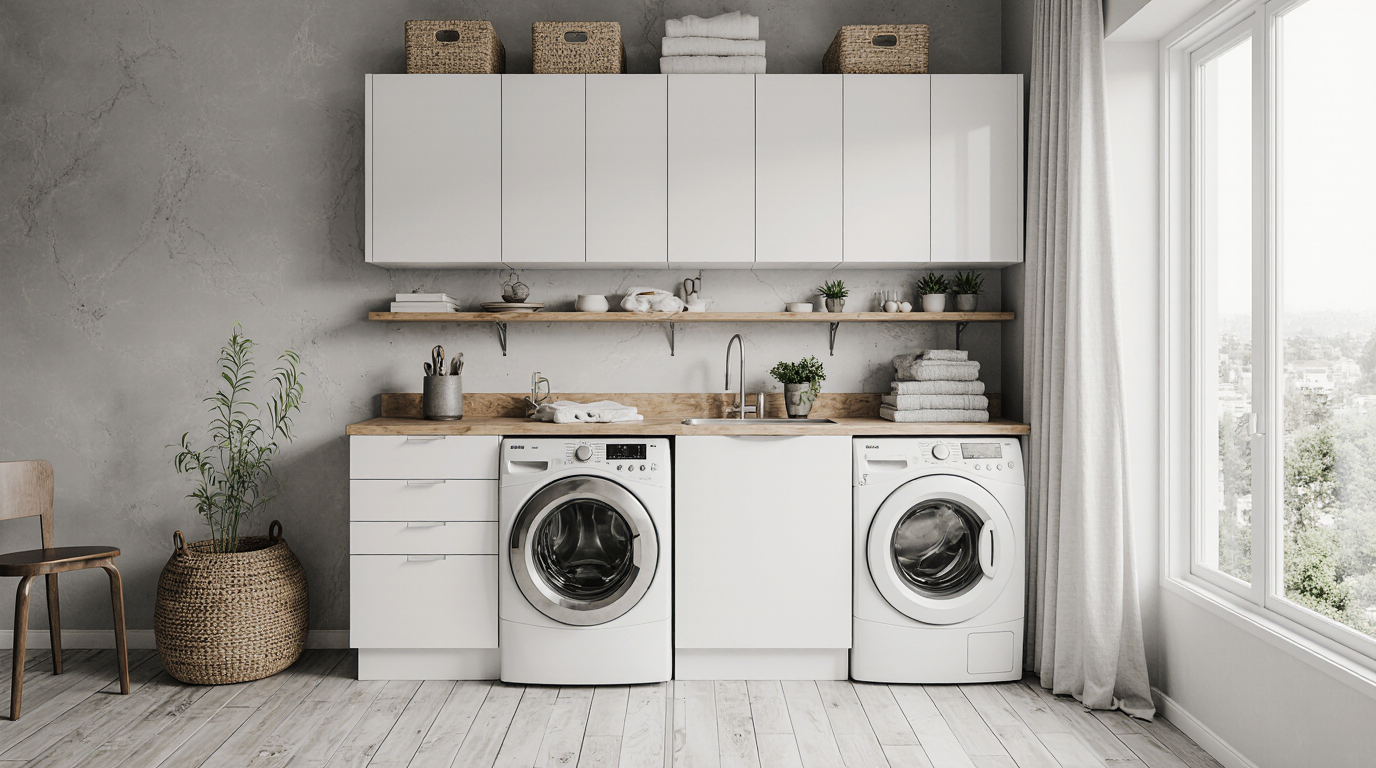
Practical yet attractive storage is essential for compact laundry spaces. Vertical storage through open shelving, hidden drawers, and integrated cabinetry enhances efficiency. Foldable or retractable racks and ironing boards save space while remaining functional. Smart use of height allows additional storage without sacrificing openness. Clever storage also extends to hidden compartments or sliding drawers for laundry hampers, ensuring that dirty clothes are contained and the room retains a clean, streamlined appearance.
Lighting plays a surprisingly transformative role in compact laundry areas. Bright lighting enhances the sense of space, cleanliness, and comfort. Natural light is ideal whenever possible, but artificial lighting can be optimized with recessed ceiling lights, under-cabinet LED strips, or even decorative pendant lights above a folding counter. Even illumination simplifies sorting, folding, and other tasks, enhancing the user experience. Mirrors strategically placed on walls or cabinet fronts can further amplify the sense of space, reflecting light and making the room feel more open than it truly is.
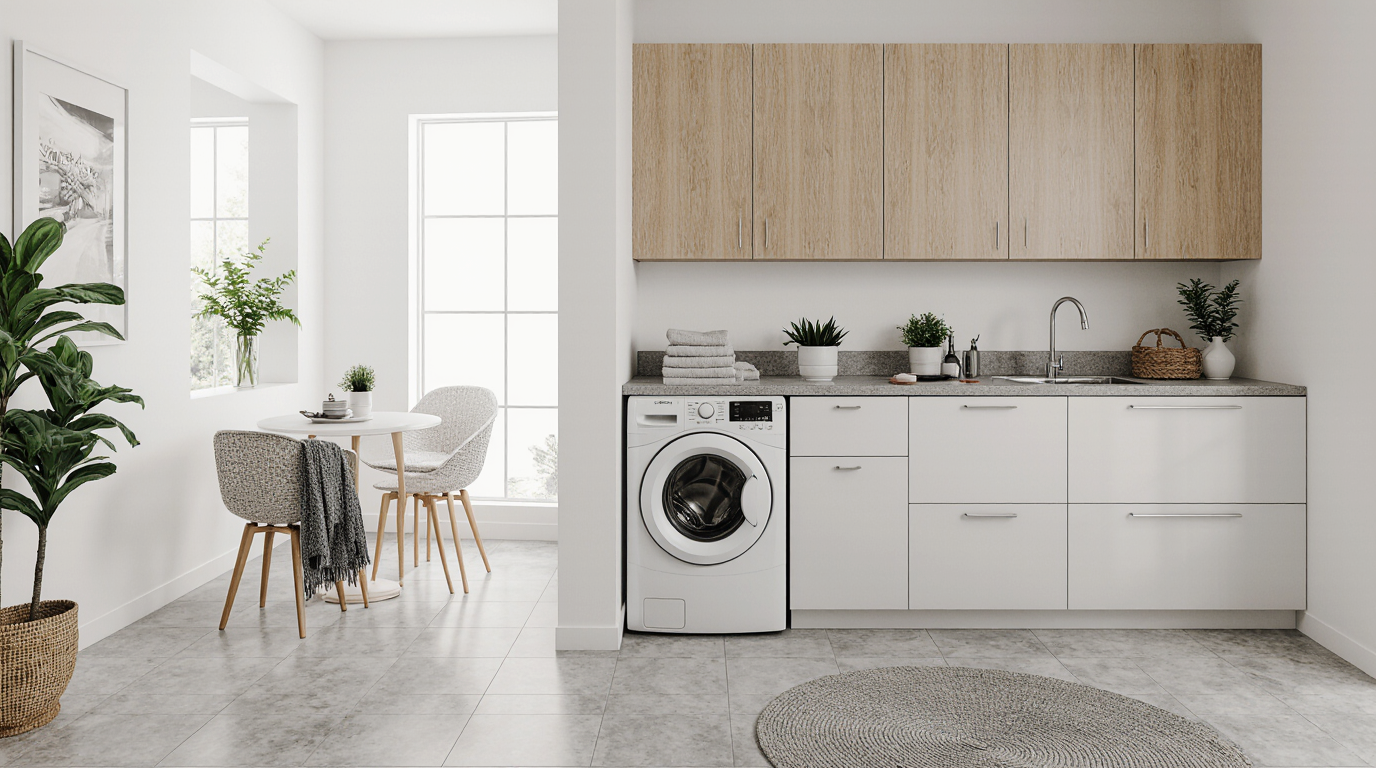
Choosing the right color palette significantly impacts the perceived size and mood of a compact laundry space. Lighter tones, such as soft whites, pale grays, or pastel blues, can make the room feel airy and open. Strategic pops of color or contrasting edges inject personality while maintaining balance. Neutral palettes combined with organic textures lend a sophisticated, cozy atmosphere. Thoughtful color coordination elevates the room’s mood and makes routine tasks more enjoyable.
Smooth workflow and ergonomic planning make small laundry spaces highly functional. Design should accommodate step-by-step laundry processes, facilitating ease and efficiency. Incorporating a countertop above front-loading appliances can provide an immediate workspace for folding or treating clothes, while a nearby sink offers convenience for handwashing delicate items. A well-planned, ergonomic layout guarantees comfort and reduces fatigue during household chores. Logical organization and task sequencing enhance usability and reduce stress.
The addition of aesthetic details elevates a small laundry room from purely utilitarian to luxurious. Decorative backsplash tiles behind sinks or counters, stylish cabinet handles, and coordinated storage baskets contribute to a cohesive design that reflects personal style. Even small touches, such as a framed artwork or a small plant, can add personality and visual interest. Minimalist layouts maximize space and conceal clutter, whereas vintage-inspired elements add playful charm. Prioritizing comfort and pleasure in design ensures the laundry room is both practical and inviting.
Innovative solutions, such as fold-down drying racks, pull-out ironing boards, or multipurpose islands, are increasingly common in small laundry room design. Smart design solutions accommodate various activities while preserving limited room. Multi-functional furniture or modular units can also expand storage and usability, making even the most compact space highly versatile. For example, a countertop can double as a workspace for laundry and a decorative area for displaying small plants or household items, blending form and function seamlessly.
Sustainability is another important consideration in modern small laundry room design. Incorporating eco-friendly machines, faucets, and materials lowers environmental footprint and operational costs. Sustainable choices are now standard, allowing efficient, stylish, and responsible spaces. Choosing appliances with advanced energy ratings, installing low-flow faucets, or using reclaimed wood for cabinetry are simple yet impactful ways to create a sustainable and stylish laundry space.
Thoughtful organization ensures small laundry rooms operate smoothly and appear neat. Labeled storage and organized zones streamline chores and preserve tidiness. Smart placement of items by frequency optimizes workflow. A small laundry room that feels organized and thoughtfully designed encourages routine upkeep, making the space both functional and visually appealing over time.
From storage to aesthetics, each design choice shapes the room’s usability and ambiance. Integrating storage solutions, advanced appliances, effective illumination, and decor ensures a polished, efficient laundry environment. Embracing creativity and careful planning ensures that the laundry room, often overlooked, becomes a seamless extension of the home’s overall design, enhancing both daily routines and long-term value. Optimal balance of aesthetics and usability allows small laundry rooms to achieve both sophistication and everyday functionality.